W. Andrew Smith
Professor of New Testament and Early Christianity
W. Andrew Smith is Professor of New Testament and Early Christianity, and serves as the Director of the Center for Research of Biblical Manuscripts and Inscriptions (crbmi.org). He earned his BS in Computer Engineering from the University of Illinois, two MA degrees (Biblical Literature and Biblical Languages) from Shepherds Theological Seminary, and a PhD in New Testament and Christian Origins from the University of Edinburgh. He has taught at Shepherds since 2011.

His research and teaching interests revolve around the transmission and interpretation of the texts of the New Testament, ranging from textual criticism and manuscript studies to Greek discourse analysis. Correspondingly, he contributes as a New Testament linguist in Shepherds’ Department of Archaeology, offering valuable insight concerning early Christian literature, culture, transmission, and interpretation. Based on his interest in biblical manuscripts, Andrew serves as Project Supervisor of the Greek Paul Project for the Museum of the Bible Scholars Initiative and is currently editing the Editio Critica Maior volumes of the Pastoral Epistles for the Institut für neutestamentliche Textforschung (INTF). Andrew also serves as Assistant Editor for the Society of Biblical Literature’s Text-Critical Studies series.
Andrew is married to Valerie, who works as a biostatistician for clinical research.
DEGREES:
- BS University of Illinois
- MA Shepherds Theological Seminary
- MA Shepherds Theological Seminary
- PhD University of Edinburgh
SPECIALTIES:
- Textual Criticism
- Hellenistic Greek
- Greek Palaeography
- Discourse Analysis
Monographs/Edited Volumes
- A Study of the Gospels in Codex Alexandrinus: Codicology, Palaeography, and Scribal Hands (New Testament Tools, Studies and Documents 48; Leiden: Brill, 2014).
- Novum Testamentum Graece: Editio Critica Maior. Die Pastoralbriefe.
(Stuttgart: Deutsche Bibelgesellschaft, in preparation).
Peer-Reviewed and Lexicon/Dictionary Articles
- “Clothing” and “Protection.” In The Lexham Theological Wordbook, ed. John D. Barry. Bellingham: Logos Bible Software, 2014.
- “Evaluating a Critical Evaluation of the CBGM: A Review Article.” TC: A Journal of Biblical Textual Criticism 24 (2019).
- “Mining Manuscript Data in the New Testament Virtual Manuscript Room.” Classics@ 18 (2020).
- “Purification,” “Upright,” and “Washing.” In The Dictionary of the Bible and Western Culture: A Handbook for Students, eds. Mary Ann Beavis and Michael Gilmour. Sheffield: Sheffield Phoenix Press, 2012.
- Smith, W. Andrew and Valerie Smith. “P. Duke Inv. 1377 (𝔓136): A Fragmentary Acts of the Apostles Papyrus.” Novum Testamentum 60.3 (2018): 290–310.
- “Mark 16 and the Eusebian Apparatus: Greek and Latin Solutions.” Comparative Oriental Manuscript Studies Bulletin 8/2 (2022): 475–492.
- “Data Democratization and Biblical Manuscript Studies: A Caution for the Age of Access.” TC: A Journal of Biblical Textual Criticism 29 (2024): 183–204.
Books
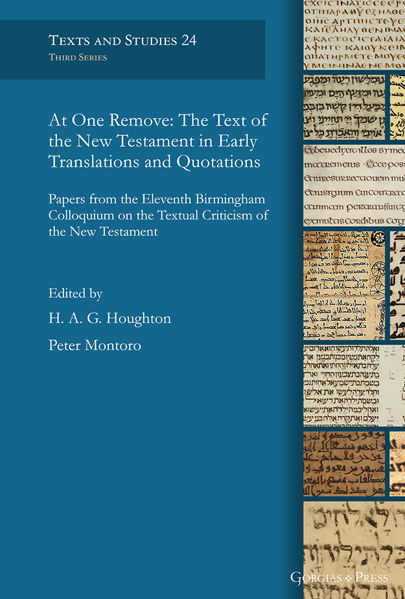
“To Be or Not To Be: Presence and Absence of Copulative Verbs in Greek and Latin New Testament Manuscripts,” in At One Remove: Indirect Evidence and the Textual History of the New Testament, eds. Hugh Houghton and Peter Montaro (Texts and Studies; Piscataway: Gorgias Press), 2020.
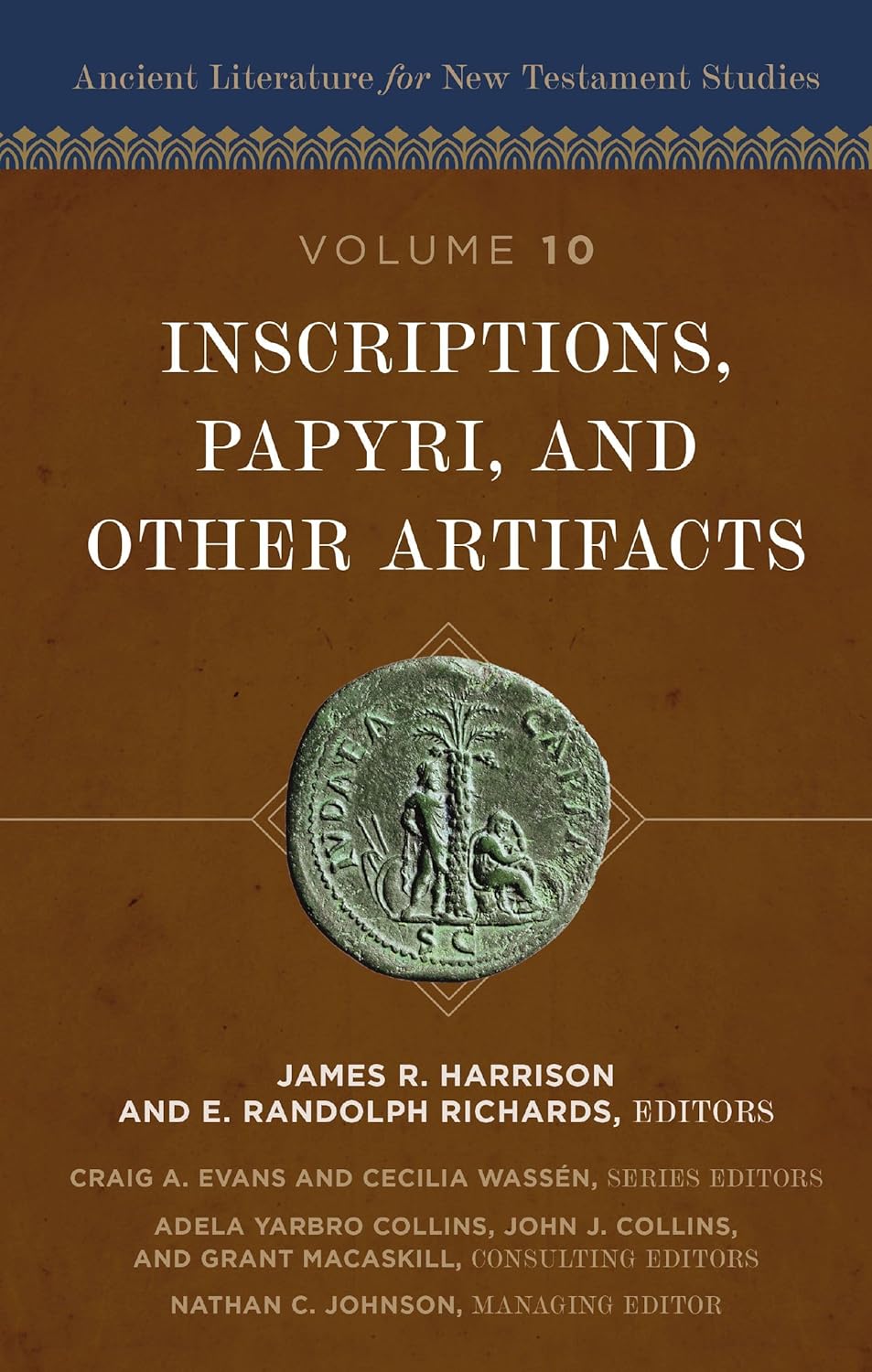
“Papyrus, Codices, and Rolls,” in Inscriptions, Papyri, and Other Artifacts, eds. James R. Harrison and E. Randolph Richards (Ancient Literature for New Testament Studies 10; Grand Rapids: Zondervan), 2024.
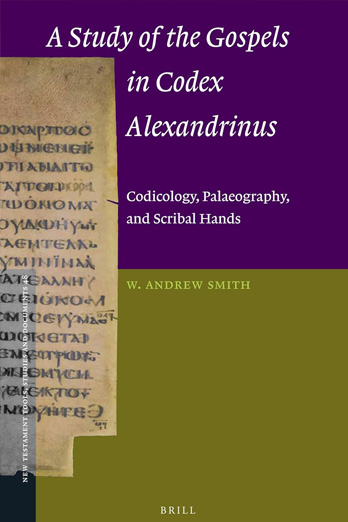
A Study of the Gospels in Codex Alexandrinus – Codicology, Palaeography, and Scribal Hands, W. Andrew Smith (Brill), 2014.
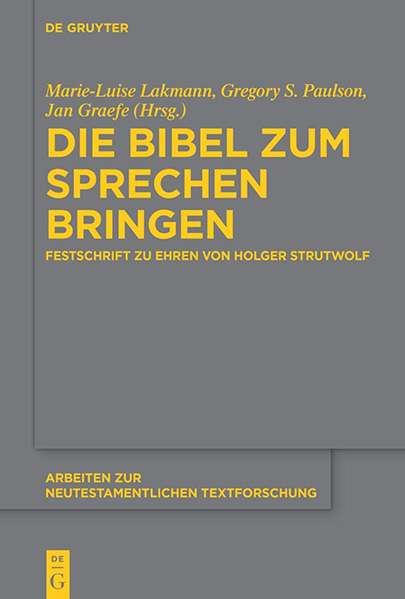
“Silence is Not Golden: Focal Prominence, Quiet Spots, and Textual Variation,” in Die Bibel zum Sprechen bringen. Festschrift zu Ehren von Holger Strutwolf, eds. Marie-Luise Lakmann, Gregory S. Paulson, and Jan Graefe (Arbeiten zur Neutestamentlichen Textforschung 61; Berlin: De Gruyter), 2025.